A quality blender is one of the most versatile kitchen appliances you can own. Whether you’re making morning smoothies, blending soups, creating nut butters, or mixing frozen cocktails, the right blender transforms what’s possible in your kitchen. From powerful countertop models to portable personal blenders and handheld immersion blenders, finding the perfect match for your needs requires understanding the differences between these popular appliance types.
With kitchen trends 2025 emphasizing health-conscious cooking and meal preparation, blenders have become even more essential for busy households. Whether you’re focused on fitness smoothies, baby food preparation, or creating vibrant sauces for your fitted kitchens meals, a reliable blender saves time and delivers consistent results. This comprehensive guide covers everything from basic operation to advanced features, helping you navigate the crowded blender market with confidence.
I’ve spent weeks testing the top blender models across all categories—from budget-friendly options to premium brands. This pillar page breaks down blender types, evaluates leading models, and provides the insights you need to make a smart investment for your kitchen.
Table of Contents
- Quick Picks: Best Blenders at a Glance
- Understanding Blender Types
- Why Every Kitchen Needs a Blender
- Key Features to Consider When Buying
- Countertop vs. Immersion vs. Personal Blenders
- Top Blender Models Reviewed
- Side-by-Side Comparison
- Buying Guide by Use Case
- Care, Cleaning, and Maintenance
- Frequently Asked Questions
- Final Recommendations
Quick Picks: Best Blenders at a Glance
Ninja Detect Duo
Powerful 1800-watt motor with smart BlendSense technology. Handles everything from smoothies to nut butter with precision and ease. Multiple single-serving options included.
View on AmazonVitamix 5300
Professional-grade performance with variable speed control. Perfect for those who demand the smoothest results and don’t mind investing in durability and longevity.
View on AmazonImmersion Blender Pro
Lightweight handheld design perfect for blending soups directly in the pot. Includes whisk and chopping attachments for versatility beyond traditional blending.
View on AmazonTopZee Portable Blender
USB-rechargeable personal blender perfect for on-the-go smoothies. Compact design fits in bags and includes multiple drinking cup options for convenience.
View on AmazonOster MyBlend Personal Blender
Affordable personal blender with solid performance. Single-serve cups included, making it ideal for individuals or small households starting out.
View on AmazonUnderstanding Blender Types
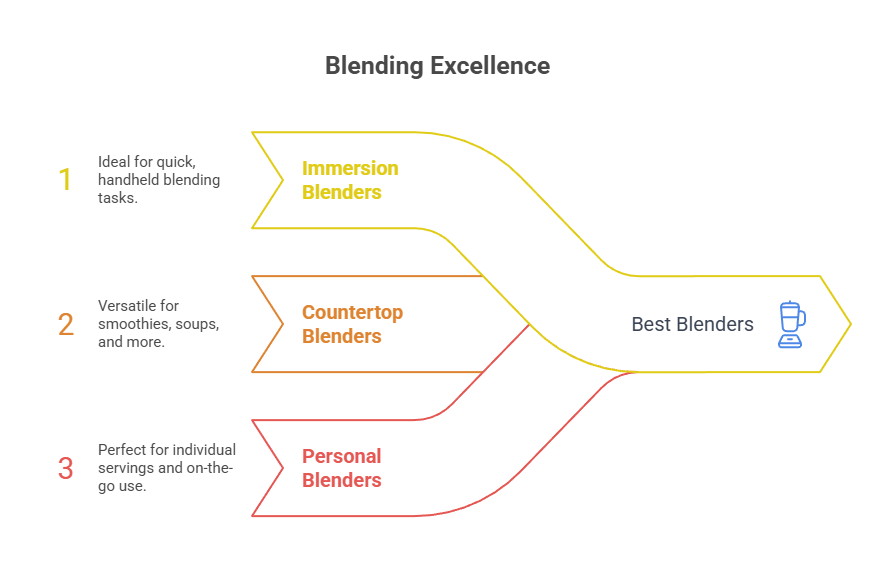
Blenders come in three primary categories, each designed for specific tasks and kitchen situations. Understanding these distinctions helps you choose equipment that matches your actual cooking habits and space constraints.
Countertop Blenders
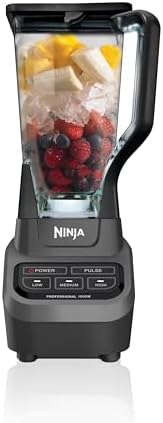
These traditional blenders sit on your counter and feature a motorized base with a large pitcher or jar. They’re the workhorses of the blender world, offering powerful motors ranging from 500 to 3000 watts. Countertop blenders excel at handling tough ingredients like ice, nuts, and frozen fruit. They’re ideal for making large batches and offer the most versatility for serious home cooks who want a single kitchen master appliance.
Immersion Blenders
Also called hand blenders or stick blenders, these handheld devices have a rotating blade at the end of a handle. You insert them directly into pots, bowls, or cups to blend ingredients in place. Immersion blenders are compact, easy to clean, and perfect for small tasks like pureeing soup or making mayo. Many include whisk and chopping attachments that expand their functionality. They’re particularly beloved in modern kitchen design for their space-saving benefits.
Personal Blenders
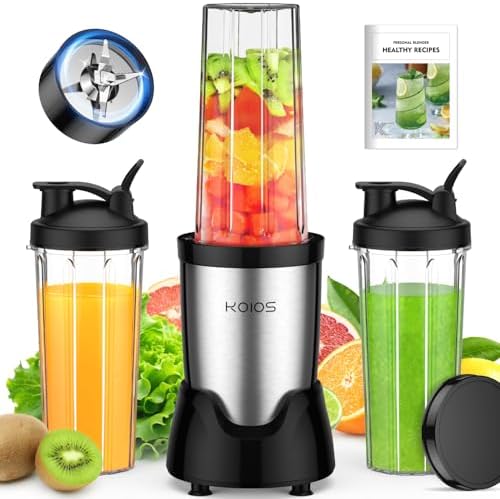
These compact countertop blenders feature small jars that double as drinking cups. Many are portable with rechargeable batteries, making them perfect for smoothies on the go. Personal blenders typically have less powerful motors than full-size models but are ideal for single-serve smoothies, protein shakes, and quick breakfast preparations.
Which Type Should You Choose?
Consider your primary use case. If you make large-batch soups or nut butters for fitted kitchens meal prep, a countertop blender is essential. For quick soup pureeing and light blending, an immersion blender covers most kitchen needs. For on-the-go smoothies and portable kitchen trends 2025 convenience, a personal blender completes the picture. Many home cooks benefit from having both a countertop and immersion blender for maximum versatility.
Why Every Kitchen Needs a Blender
Nutritious Smoothies and Beverages
Blenders make it effortless to incorporate whole fruits, vegetables, and protein into drinkable form. Unlike juicers, blenders retain the fiber from ingredients, making for more nutritious and filling drinks. From green smoothies packed with spinach to protein-packed workout drinks, blenders enable health-focused kitchen trends 2025.
Silky Soups and Sauces
Creating restaurant-quality cream soups at home becomes simple with a quality blender. Whether using an immersion blender directly in the pot or transferring to a countertop model, you can achieve perfectly smooth textures for bisques, curries, and sauces.
Nut Butters and Spreads
Make fresh peanut butter, almond butter, or tahini from raw nuts using a high-powered blender. The high-speed blending generates enough heat to transform nuts into creamy spreads without added oils.
Ice Crushing and Frozen Drinks
Quality blenders pulverize ice and frozen fruit into snow-like consistency perfect for frozen margaritas, slushies, and frozen desserts. This feature separates budget blenders from serious kitchen equipment.
Baby Food Preparation
For parents, blenders make preparing homemade baby food simple and economical. Steam vegetables and fruits, then blend to the desired consistency. An immersion blender offers particular convenience for this task.
Time-Saving Meal Prep
Whether creating vegetable purees, grinding grains into flour, or making pestos, blenders accelerate meal preparation. This efficiency appeals to anyone juggling modern kitchen master chef ambitions with busy schedules.
Key Features to Consider When Buying
Motor Power
Measured in watts, motor power directly impacts blending speed and the ability to handle tough ingredients. Here’s what different wattages offer:
- 300-500 watts: Budget personal blenders, suitable for soft fruits and frozen items in small quantities
- 600-1000 watts: Mid-range countertop blenders handling most everyday tasks and small batches
- 1200-1800 watts: High-performance models that crush ice with ease and handle nut butters
- 2000+ watts: Professional-grade equipment for heavy daily use and the toughest ingredients
Wattage Matters, But So Does Design
A well-designed 1000-watt blender with proper blade geometry can outperform a poorly designed 1500-watt model. Blade quality, motor efficiency, and pitcher design all influence actual blending performance beyond raw wattage.
Jar Capacity
Choose based on your typical serving sizes and family needs:
- 16-24 ounces: Personal blenders for single-serve drinks
- 32-40 ounces: Small countertop blenders for 1-2 servings
- 48-64 ounces: Standard countertop blenders for families and batch preparation
- 64+ ounces: Large capacity models for meal prep and commercial-style cooking
Speed Settings and Controls
More speed options provide greater control. Budget blenders might offer simple low-medium-high settings, while premium models include 10+ speeds plus pulse functions. Variable speed control allows you to start slow when incorporating dry ingredients and gradually increase speed.
Jar Material
Blender jars come in three materials, each with advantages:
- Glass: Odor and stain-resistant, doesn’t crack from hot items, heavier and more stable
- Plastic (Tritan): Lightweight, shatterproof, good clarity, but may retain odors over time
- Stainless Steel: Durable and attractive, but you can’t see blending progress
Blade Design
Stainless steel blades are essential. Look for designs that offer multiple blade tiers to ensure thorough blending without dead zones. Some premium models feature removable blades for easier cleaning, though fixed blades are less prone to leaks.
Special Features
Modern blenders often include advanced features that justify higher prices:
- Pre-programmed settings for smoothies, soups, frozen drinks
- Smart sensors that detect ingredient type and adjust blending automatically
- Wireless connectivity and app controls
- Heating elements that warm soups through friction blending
- Sound-dampening technology to reduce noise
- Multiple jar sizes and accessories included
Countertop vs. Immersion vs. Personal Blenders
Countertop Blenders
- Maximum power and versatility
- Handle any ingredient type
- Ideal for large batches
- Best for nut butters and ice crushing
- Professional heating through friction
Countertop Drawbacks
- Takes up significant counter space
- Higher noise level
- More cleanup with multiple parts
- More expensive to purchase
- Overkill for single smoothies
Immersion Blenders
- Compact and easy storage
- Perfect for soup pureeing
- Quick and simple cleanup
- Affordable entry point
- Multiple attachments included
Immersion Drawbacks
- Less powerful than countertop
- Struggles with ice
- Not ideal for large batches
- Requires user attention and effort
- Less smooth texture for some tasks
Personal Blenders
- Ultimate portability
- Perfect for single servings
- Minimal cleanup
- Space-saving design
- Budget-friendly options available
Personal Drawbacks
- Small capacity limits versatility
- Weak motors struggle with ice
- Not suitable for batch cooking
- Limited texture quality
- Battery models require charging
Top Blender Models Reviewed
1. Ninja Detect Duo Countertop Blender
Motor: 1800W | Capacity: 72 oz | Speeds: Auto-Detect
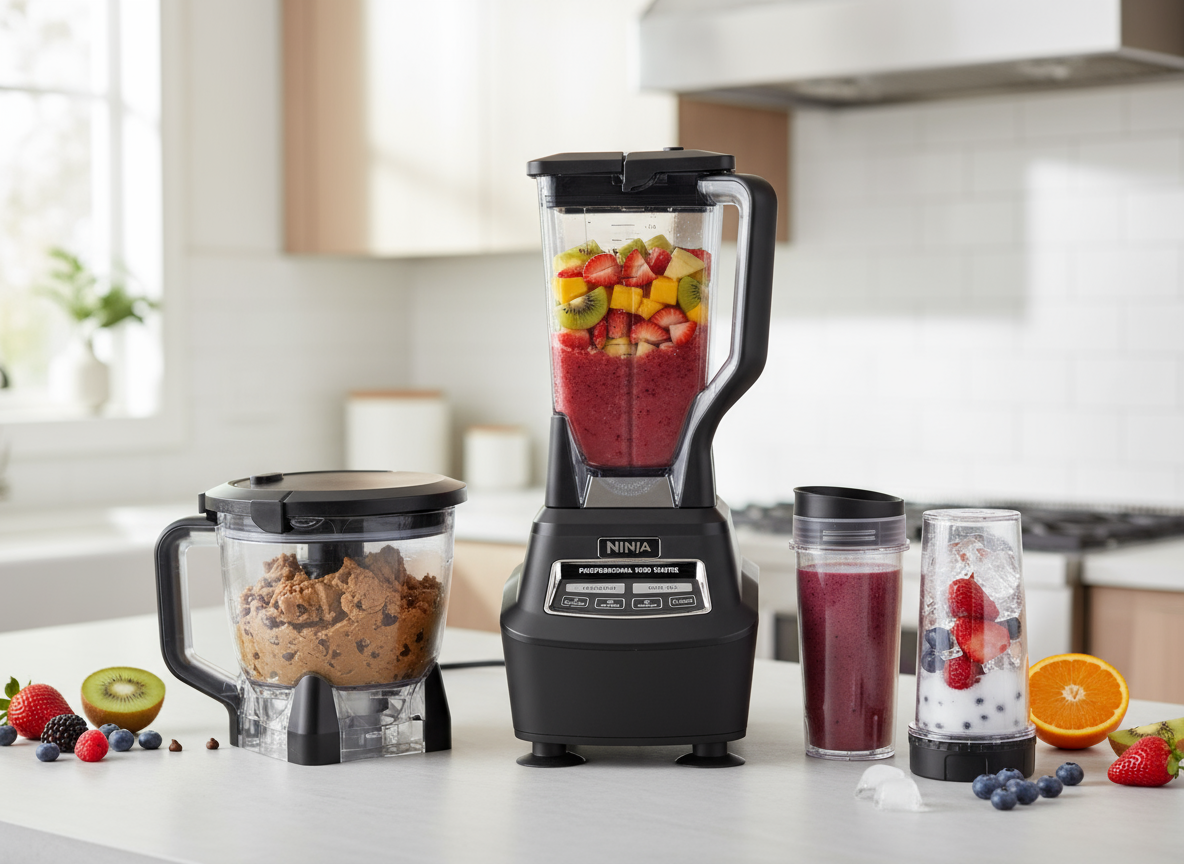
The Ninja Detect Duo stands out as a true all-rounder that handles virtually any blending task with intelligence and power. With its 1800-watt motor and proprietary BlendSense technology, this blender represents the sweet spot between professional capability and user-friendly operation.
What Makes It Great
The standout feature is the BlendSense sensor that automatically detects different ingredients—ice, fruit, leafy greens—and adjusts blending time and intensity accordingly. The three-tiered removable blade cleans easily and ensures nothing gets stuck during blending. Unlike many blenders that struggle with small batches, the Ninja includes single-serving cups that work seamlessly with the base unit, making it perfect for morning smoothies.
In testing, the ice-crushing performance delivered snow cone-like consistency, while nut butter blending produced silky-smooth results without splatter. The suction cups on the base prevent the unit from bouncing during operation, and the secure lid releases with a simple button press. For the price point, this represents exceptional value for anyone seeking professional performance without professional-level cost.
Pros
- Smart BlendSense technology
- Powerful motor handles any ingredient
- Removable blade for easy cleaning
- Multiple serving options included
- Excellent value for performance level
Cons
- Takes up counter space
- Louder than premium alternatives
- App features less essential than core blending
- Large size limits storage options
Best For: Home cooks seeking powerful all-around performance who value convenience and intelligence in their kitchen appliances, particularly those making both large batches and single servings.
View on Amazon2. Vitamix 5300 Premium Countertop Blender
Motor: 2.0 HP | Capacity: 64 oz | Speeds: Variable
Vitamix represents the gold standard in blender quality, and the 5300 delivers professional performance at a more accessible price point than flagship models. Built with commercial-grade construction, this blender feels robust and engineered for longevity.
What Makes It Great
The variable speed dial gives you precise control, from gentle stirring to maximum power. The 2.0 horsepower motor is quiet yet incredibly powerful, handling everything from delicate baby food to industrial-strength nut butters. The wet blade assembly design means you can blend hot liquids directly without removing food to another container—a major time-saver for soup preparation.
Quality construction is evident in every detail. The container is durable Tritan plastic that resists staining and odor. The motor is backed by a comprehensive warranty because Vitamix stands behind durability claims. While the price is higher than budget options, the value emerges over years of reliable operation.
Pros
- Professional build quality and reliability
- Variable speed control
- Exceptional warranty coverage
- Can blend hot liquids safely
- Investments pays off over time
Cons
- Premium price point
- No preset programs
- Takes learning curve to master
- Heavy and difficult to move
Best For: Serious home cooks and chefs who prioritize build quality and reliability, willing to invest in equipment that will last decades. Perfect for anyone who blends daily.
View on Amazon3. Immersion Blender Pro Hand Blender
Motor: 500W | Capacity: N/A | Attachments: Whisk, Chopper
This handheld immersion blender excels at the tasks it’s designed for: pureeing soups directly in the pot, blending small batches, and handling quick kitchen tasks. The compact design proves invaluable for modern kitchen design that values counter space.
What Makes It Great
The ergonomic handle distributes weight for comfortable use during extended blending sessions. The 500-watt motor provides sufficient power for most immersion blending tasks without being overkill. The included whisk attachment enables making whipped cream or beating eggs, while the chopping cup lets you quickly mince vegetables. The stainless steel shaft and blending foot resist corrosion and wear.
In real-world use, this blender smoothly pureed vegetable soups to silky consistency and quickly made homemade salad dressing. The learning curve is minimal—even kitchen novices can operate this confidently. Cleanup is remarkably simple, usually just rinsing under water after a quick blend.
Pros
- Affordable entry to blending
- Multiple attachments included
- Easy to clean
- Compact storage
- Perfect for soups
Cons
- Can’t handle ice
- Limited to smaller quantities
- Requires user effort
- Less smooth texture than countertop
Best For: Home cooks focused on soup preparation and light blending tasks who value space efficiency and simplicity. Ideal for small kitchens or supplementing a full-size blender.
View on Amazon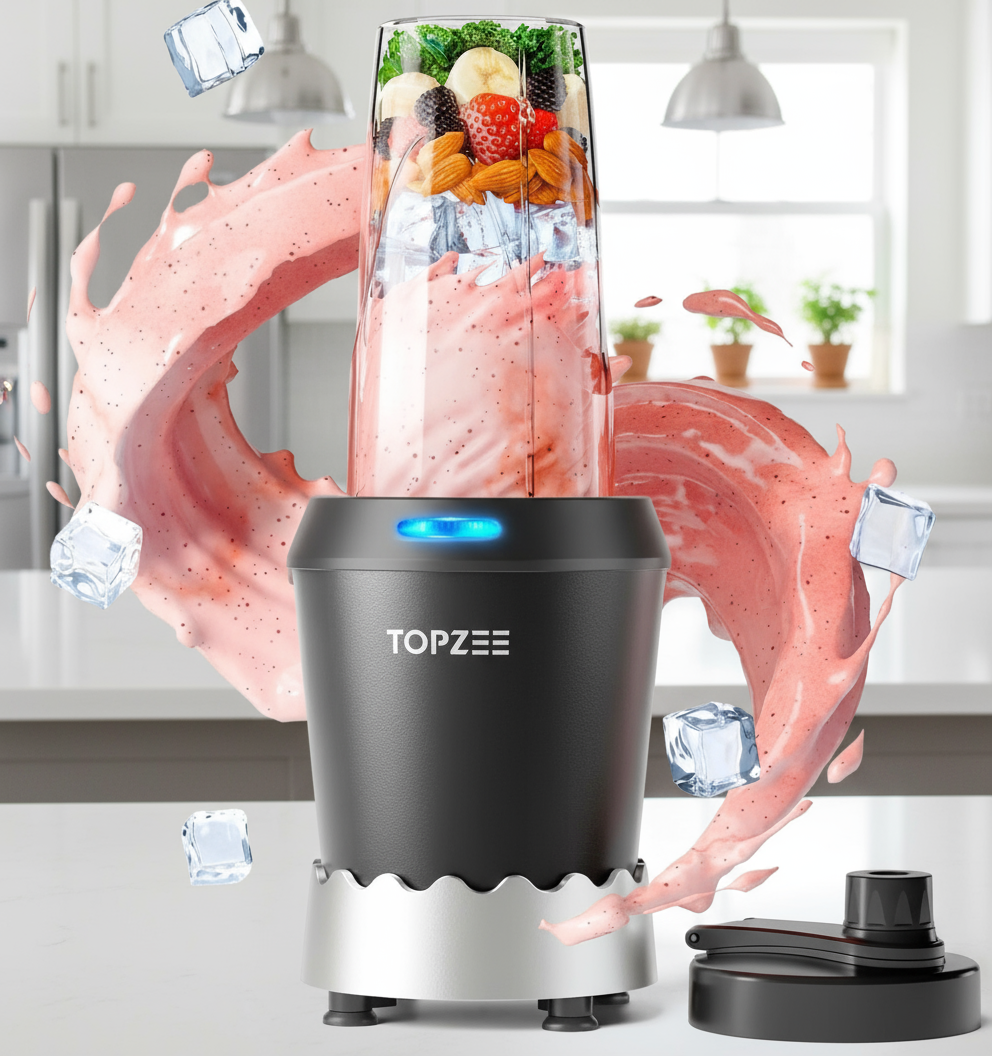
4. TopZee Portable Personal Blender
Motor: 300W | Capacity: 20 oz | Battery: USB Rechargeable
In an era where kitchen trends 2025 emphasize convenience and portability, the TopZee portable blender delivers a genuinely useful solution for making smoothies anywhere. This USB-rechargeable personal blender fits in bags and offers impressive functionality at a compact size.
What Makes It Great
The rechargeable battery means no outlet required—blend smoothies at your desk, in the gym, or while traveling. The motor, while modest at 300 watts, handles soft fruits and frozen berries efficiently for single-serve smoothies. Multiple cup options come included, so you can blend in one cup and drink from another. The LED indicator shows battery status at a glance.
During testing, the blender created smooth fruit smoothies without chunks. Battery life proved sufficient for several blending sessions before requiring recharging. The stainless steel blades stay sharp, and the overall build feels durable despite the portable form factor.
Pros
- Truly portable design
- USB rechargeable
- Multiple cups included
- Affordable price
- Perfect for smoothie enthusiasts
Cons
- Weak motor can’t handle ice
- Small capacity limits versatility
- Battery requires regular charging
- Not suitable for large batches
Best For: People with active lifestyles who want fresh smoothies on the go. Perfect for gym enthusiasts, travelers, and anyone needing convenient single-serve blending without counter space.
View on Amazon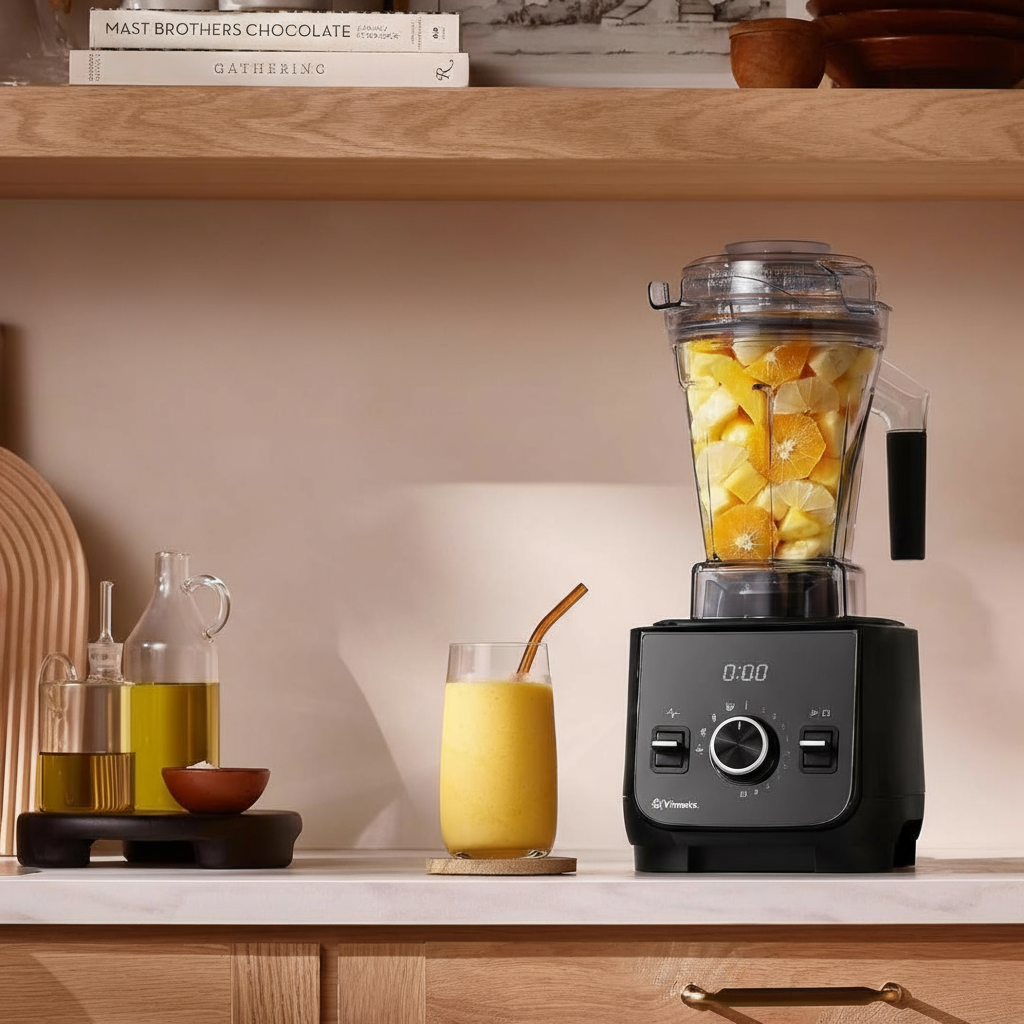
5. Oster MyBlend Personal Blender
Motor: 250W | Capacity: 16-24 oz | Speeds: 2
For budget-conscious buyers entering the blender world or those seeking a dedicated personal smoothie maker, the Oster MyBlend delivers reliable performance without unnecessary frills or complexity.
What Makes It Great
The simplicity is the strength here. Single-serve cups work as both blending vessels and drinking containers, minimizing cleanup. The two-speed motor (low and high) covers the essential needs for smoothie preparation. The price point makes it an excellent gateway to understanding your blending needs before investing in premium equipment. The compact size fits on kitchen counters without dominating the space.
Testing showed solid performance for typical smoothies using frozen fruit and milk. While the motor lacks the power for ice crushing or nut butters, it handles the everyday smoothie task admirably. The design emphasizes durability with a sturdy plastic construction that resists breakage.
Pros
- Very affordable
- Simple operation
- Compact design
- Good for beginners
- Minimal cleanup
Cons
- Weak motor
- No ice handling
- Limited speed control
- Small capacity
Best For: Budget shoppers, first-time blender buyers, and anyone needing a dedicated single-serve smoothie maker without complex features or high price.
View on AmazonSide-by-Side Comparison
| Model | Type | Motor | Capacity | Speeds | Best For | Price Range |
|---|---|---|---|---|---|---|
| Ninja Detect Duo | Countertop | 1800W | 72 oz | Auto-Detect | All-around use | Mid-range |
| Vitamix 5300 | Countertop | 2.0 HP | 64 oz | Variable | Professional use | Premium |
| Immersion Pro | Handheld | 500W | N/A | 2 | Soups and sauces | Budget |
| TopZee Portable | Personal | 300W | 20 oz | 1 | Portable smoothies | Budget |
| Oster MyBlend | Personal | 250W | 16-24 oz | 2 | Basic smoothies | Budget |
Buying Guide by Use Case
For Smoothie Enthusiasts
If smoothies are your primary focus, either the Ninja Detect Duo or a personal blender works well depending on serving size. The Ninja handles both single and batch smoothies, while personal blenders focus purely on individual servings. For green smoothies specifically, ensure adequate motor power to handle leafy ingredients smoothly.
For Soup and Sauce Makers
The immersion blender excels here, allowing you to puree soup directly in the pot. If you make large quantities regularly, a countertop blender like the Vitamix offers superior texture and batch capability. Many home cooks benefit from having both for different situations.
For Nut Butter and Complex Recipes
A high-powered countertop blender becomes essential. The Ninja or Vitamix can generate sufficient heat through friction to transform whole nuts into butter without added oils. Budget blenders simply lack the sustained power and torque required for this task.
For Small Kitchens
An immersion blender or compact personal blender saves valuable counter space. These can be stored in drawers rather than occupying premium kitchen real estate. Prioritize minimal footprint if space is limited.
For Busy Mornings
Portable personal blenders like the TopZee or simple single-serve models handle quick smoothies before rushing out the door. The minimal cleanup compared to full-size blenders makes these ideal for time-conscious individuals.
For Long-Term Investment
Premium blenders like the Vitamix cost more upfront but deliver reliability over decades. If budget allows, this investment pays dividends through years of consistent performance. Mid-range options like the Ninja offer strong value balancing cost and capability.
Budget Breakdown by Need
Under $100: Personal blenders or budget immersion models for basic smoothies
$100-$300: Solid mid-range countertop or Ninja models for all-around use
$300-$600: Premium Vitamix and professional-grade countertop options
$600+: High-end specialized blenders with advanced features
Care, Cleaning, and Maintenance
Daily Cleaning
- For countertop blenders, blend warm water with a drop of dish soap for 30 seconds immediately after use
- Rinse thoroughly and allow to air dry before storing
- Never submerge the motor base in water
- For immersion blenders, rinse the blade under running water immediately
- Wipe the motor handle with a damp cloth
Deep Cleaning
- Monthly, soak the blending jar in hot soapy water for 30 minutes
- Use a brush to gently clean around blade bases
- For stubborn residue, blend hot water with baking soda
- Check blade sharpness and note any dulling
- Inspect rubber gaskets for cracks or degradation
Storage and Longevity
- Store in a cool, dry location away from heat sources
- Keep cords coiled loosely without tight knots that stress rubber
- Store immersion blenders in a utensil drawer or dedicated container
- Personal blenders can be stored on counters or in cabinets depending on aesthetics
- Keep the manual for reference on specific maintenance needs
Troubleshooting Common Issues
Blender won’t start: Check that the jar is properly locked in position and the lid is secure. Verify the outlet is working by plugging in another device.
Leaking from bottom: The seal may be damaged. Ensure the gasket is properly seated. If leaking continues, contact manufacturer for replacement parts.
Reduced blending power: Dull blades lose effectiveness. Some manufacturers offer replacement blade assemblies. Never attempt to sharpen blades yourself.
Frequently Asked Questions
Can I blend hot liquids in my blender?
Some blenders handle hot liquids, but never fill beyond two-thirds capacity. Steam can create dangerous pressure. For maximum safety, let hot liquids cool slightly, or look for blenders specifically designed for hot blending like the Vitamix.
What’s the difference between a blender and a food processor?
Blenders excel at creating smooth purees and drinks through high-speed rotation. Food processors handle chopping, slicing, and shredding through varied blade designs. Blenders work better for smoothies and soups, while food processors excel at prep tasks.
Do I really need a high-wattage blender?
For basic smoothies, 500-750 watts suffices. However, if you plan to crush ice regularly or make nut butters, higher wattage becomes essential. Consider your actual use case before paying premium prices for excessive power.
Are personal blenders worth buying?
If you regularly make single-serve smoothies, personal blenders offer convenience and minimal cleanup. They’re not replacements for countertop blenders for batch cooking, but they excel at their specific purpose.
How often should I replace my blender?
Quality blenders last 10-20+ years with proper care. Budget models might need replacement every 3-5 years. Regular cleaning and avoiding overloading extend lifespan significantly.
Can blenders grind grains into flour?
High-powered blenders like the Vitamix can grind grains, though specialty grain mills produce finer results. Expect to grind in smaller batches rather than large quantities.
What’s the quietest blender option?
Unfortunately, high power correlates with noise. Most quality blenders operate at 80+ decibels. Some premium models include sound-dampening insulation, but expecting quiet operation from a powerful blender is unrealistic.
Do expensive blenders really perform better?
Higher prices often reflect durability, warranty coverage, and refined design rather than just raw blending power. The Ninja offers excellent performance at mid-range prices, while Vitamix charges for longevity and build quality.
Final Recommendations
Choosing the right blender depends on honest assessment of your actual kitchen needs. If you make daily smoothies and want professional nut butter capability, the Ninja Detect Duo offers remarkable value. For those seeking investment equipment that lasts decades, the Vitamix 5300 justifies its premium price.
Don’t overlook immersion blenders for soup preparation and light tasks—they offer genuine value in space efficiency and simplicity. And if smoothies on the go appeal to you, portable models like the TopZee deliver unexpected usefulness.
Most home cooks benefit from having multiple blender types. An immersion blender covers quick tasks and soups, while a countertop model handles everything else. This combination approach maximizes versatility while respecting counter space and budget limitations.
Start with realistic understanding of your blending habits over the past year. If you haven’t made smoothies, expensive models won’t change behavior—start with budget options. If blending happens daily, invest appropriately in durability and capability.
Find Your Perfect Blender Today
Each of these blenders represents a different approach to kitchen mixing needs. Choose based on your actual use case, available space, and budget. The right blender becomes an indispensable tool you reach for multiple times weekly.
See table below of top 3 best sellers for current pricing and detailed specifications.
Smart Shopping Tips
- Watch for seasonal sales, particularly around Black Friday and post-holiday kitchen makeover periods
- Compare prices across retailers, as blender pricing fluctuates frequently
- Check manufacturer websites for refurbished models at significant savings
- Read user reviews focusing on long-term reliability rather than initial impressions
- Verify warranty coverage carefully—it often indicates manufacturer confidence in durability
- Consider buying bundles that include extra jars or accessories you actually need