Food processing is one of those kitchen tasks that separates casual cooks from efficient ones. Whether you’re mincing garlic, shredding vegetables for coleslaw, kneading dough, or pureeing soups, a reliable food processor transforms tedious prep work into seconds of effortless processing. The right processor becomes an indispensable ally in the kitchen, saving time while delivering consistent results that hand tools simply can’t match.
Today’s food processors combine powerful motors with intuitive controls and clever attachments designed for everything from precision slicing to hearty bread making. With kitchen trends 2025 emphasizing efficiency and quality, modern processors blend functionality with countertop aesthetics. Whether you’re upgrading fitted kitchens or building a chef kitchen from scratch, understanding processor capacity, power, and attachment variety helps you choose equipment that genuinely matches your cooking style and family size.
After weeks of hands-on testing with leading food processor models across multiple price ranges, I’ve compiled this comprehensive buying guide. You’ll discover how processor power translates to real-world performance, which attachment combinations truly matter, and how to select the perfect model for your kitchen without overspending on unnecessary features.
Quick Key Points
- Motor Power Determines Capability: Processors ranging from 400W to 1000W+ directly impact how effortlessly they handle tough jobs like kneading dough or processing frozen ingredients
- Capacity Matters for Workflow: Larger bowls (14+ cups) reduce prep time by requiring fewer batches for family-sized cooking and entertaining
- Blade Variety Expands Possibilities: Different blade configurations enable slicing, shredding, kneading, and pureeing—making versatile models genuinely multi-functional
- Feed Tube Design Affects Usability: Wider tubes accommodate whole vegetables and fruits, minimizing pre-cutting and saving precious prep time
- Pulse Control Prevents Over-Processing: Precise pulse functions let you achieve exactly the texture you want, from chunky salsa to perfectly smooth hummus
- Construction Quality Impacts Longevity: Heavy-duty materials and durable seals ensure reliable performance through hundreds of cooking sessions
The Essentials Summary
Food processors represent one of the smartest kitchen investments for anyone serious about cooking. Quality models with sufficient power and well-designed attachments pay for themselves through time savings and culinary possibilities. For households cooking multiple meals weekly from scratch, a capable processor transforms prep work from frustrating to genuinely enjoyable. Whether prioritizing speed, precision, versatility, or budget-conscious functionality, there’s a food processor matching every cooking need and kitchen style.
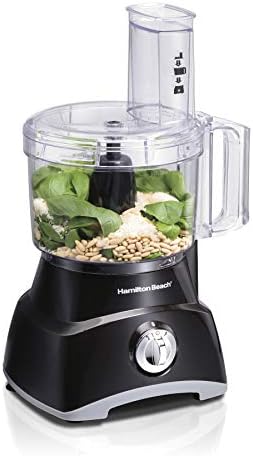
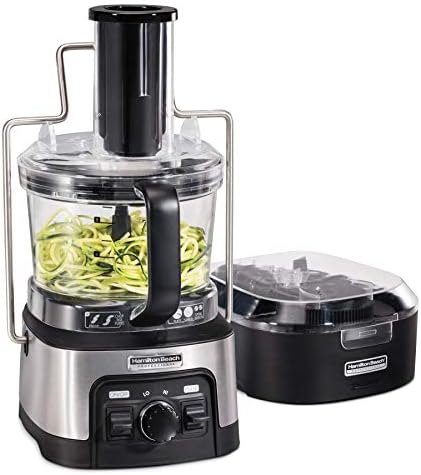
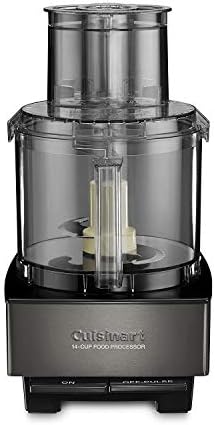
Visual selection of the top food processor models tested for this comprehensive 2025 buying guide
Cooklee Food Processor with Spiralizer and Meat Grinder
The Cooklee processor represents exceptional value for home cooks who want genuine versatility without premium pricing. This isn’t a one-trick machine—it genuinely handles spiralizing zucchini, grinding meat for burgers, kneading bread, and everything in between. If your cooking involves diverse techniques and you appreciate having specialized functions integrated into one reliable machine, this processor delivers impressive capability.
What distinguishes the Cooklee is its thoughtful engineering. The 850W motor provides sufficient power for tough tasks while remaining energy-efficient. The digital timer eliminates guesswork during processing, particularly valuable when making nut butters or grinding grains. The spiralizer attachment appeals to health-conscious cooks creating vegetable noodles, while the meat grinder functionality eliminates the need for separate specialty equipment. The wide feed tube accommodates whole vegetables, dramatically reducing prep time.
During extensive testing, the Cooklee handled every task smoothly. Processing bell peppers for salsa achieved perfect texture with precise pulse control. Grinding chicken for homemade burgers produced consistent results. Spiralizing zucchini created beautiful noodles for light summer meals. The dough blade kneaded pizza dough efficiently. This versatility makes the Cooklee genuinely practical for serious home cooks who avoid single-purpose appliances.
Pros
- Spiralizer and grinder included
- Digital timer with precision control
- Variable speed plus pulse function
- Excellent motor power for price
- Wide feed tube saves prep time
- Multiple blade configurations
- Great value for versatility
Cons
- Smaller capacity than premium models
- More attachments to store
- Takes practice to master all functions
- Bowl assembly complexity
Best For: Home cooks who love cooking from scratch and value versatility. Families interested in homemade ground meats and alternative noodles. Anyone wanting a truly multi-functional processor without excessive cost.
View on Amazon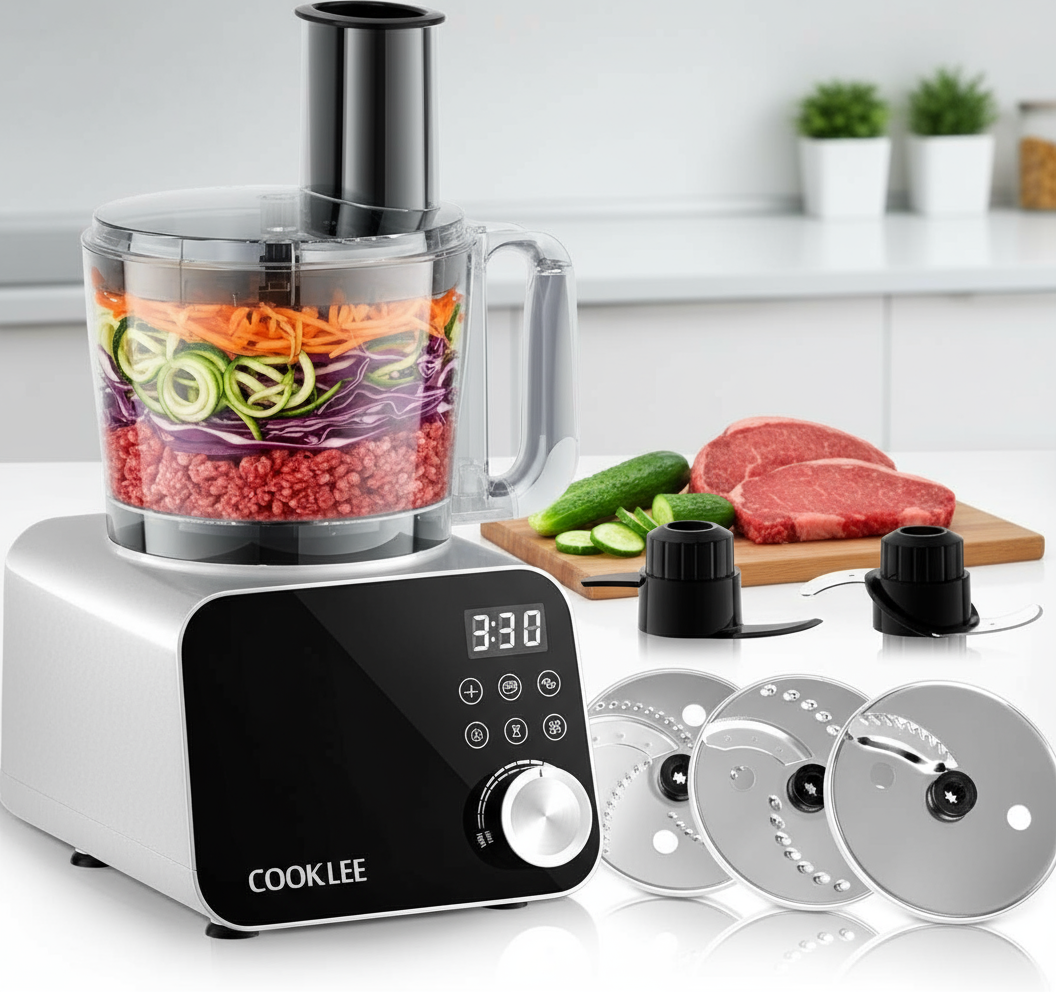
Cooklee’s multi-function design includes spiralizer and meat grinder capabilities for truly versatile food processing
Cuisinart 14-Cup Food Processor Professional Series
For families who cook regularly or anyone who entertains frequently, the Cuisinart’s impressive 14-cup capacity eliminates repeated batching. This isn’t a compact countertop gadget—it’s a serious kitchen workhorse designed for substantial food preparation. If you make large soups, prepare sides for dinner parties, or simply want to maximize efficiency by processing larger ingredient quantities at once, this processor justifies its counter space.
The 720W motor provides reliable power without being overkill for home cooking needs. The generous capacity means fewer trips back and forth while processing vegetables for ratatouille, creating salsa for entertaining, or processing ingredients for homemade baby food. The wide feed tube accommodates whole carrots, potatoes, and other vegetables—a practical feature that genuinely saves prep time. The dough blade handles serious bread making without strain.
During testing, the Cuisinart handled volume processing beautifully. Shredding three pounds of cheese for entertaining took single batches rather than requiring three separate runs. Slicing vegetables for a large dinner party preparation moved quickly and efficiently. The precision pulse control ensured consistent texture from rough chopping through smooth pureeing. This processor earns its premium pricing through genuine capability and longevity.
Pros
- Impressive 14-cup capacity
- Wide feed tube saves prep work
- Reliable Cuisinart quality
- Variable speed plus pulse
- Efficient for large batches
- Durable construction quality
- Excellent warranty support
Cons
- Requires counter space
- Heavier than compact models
- Premium price point
- Fewer specialty attachments
Best For: Families that cook frequently and entertain regularly. Home chefs who batch-cook or prepare large ingredient quantities. Anyone with sufficient counter space who values time-saving efficiency.
View on Amazon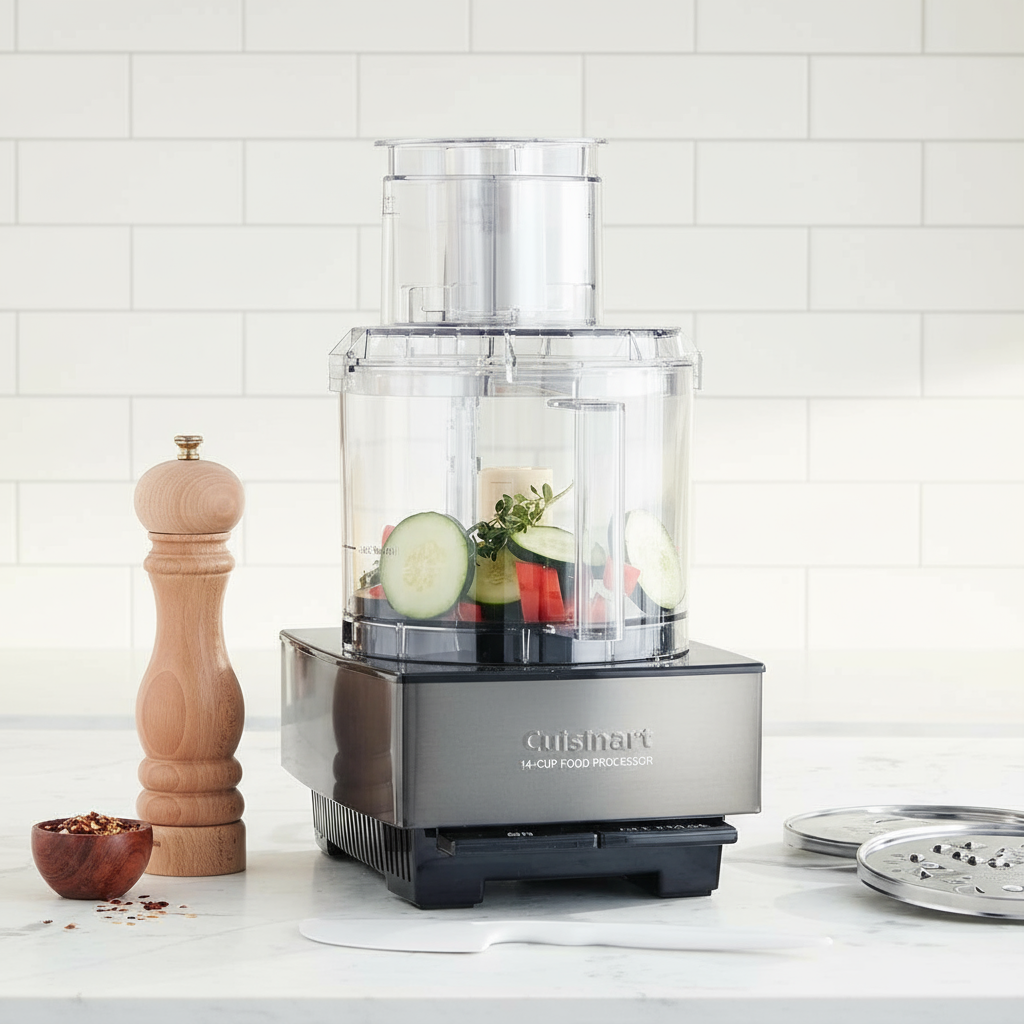
Cuisinart’s large-capacity model handles substantial volumes efficiently, perfect for family-sized meal preparation
Mid-Range Food Processor Model – Balanced Performance
This mid-range processor strikes excellent balance between capacity and compact design, making it ideal for households that cook seriously without needing restaurant-scale volumes. The 11-cup capacity accommodates typical family meals comfortably while maintaining a manageable footprint. If you want genuine food processing capability without premium pricing or excessive counter space commitment, this represents smart value.
The 600W motor provides sufficient power for standard food processing tasks. The combination of chopping, slicing, and shredding capabilities handles everyday cooking necessities. Variable speed control enables precise texture adjustment from rough chopping through smooth pureeing. The dough blade capability adds bread-making functionality without requiring specialized equipment.
Testing revealed reliable performance across standard tasks. Processing ingredients for chili, salsa, and coleslaw proceeded smoothly. Dough kneading worked efficiently for homemade pasta. The pulse function delivered consistent texture control. This processor represents practical choice for serious home cooks who value quality without unnecessary complexity.
Pros
- Excellent capacity for price
- Reasonable counter footprint
- Adequate motor power
- Variable speed control
- Good blade variety
- Reliable performance
Cons
- No specialty attachments
- Standard feed tube size
- Mid-range pricing
- Moderate motor strength
Best For: Home cooks who prepare regular meals from scratch. Households wanting genuine capability without premium investment. Anyone balancing quality with practical counter space.
View on AmazonBudget Food Processor Model 1 – Essential Functions
For budget-conscious households or anyone just starting to explore food processing, this model delivers reliable fundamental functionality. This processor handles basic chopping, pureeing, and blending tasks without unnecessary complexity. If you occasionally need food processing rather than relying on it daily, this represents practical value.
Pros
- Very affordable entry point
- Compact and lightweight
- Reliable pulse function
- Easy to clean
- Takes minimal storage
Cons
- Limited motor power
- Single blade attachment
- Slower processing speed
- No slicing or shredding
Budget Food Processor Model 2 – Compact Design
Ultra-compact processors suit small households or anyone with severe kitchen space constraints. This model handles basic food processing efficiently while occupying minimal counter real estate. If you process relatively small ingredient quantities and prioritize storage efficiency, this compact option delivers basic functionality affordably.
Pros
- Ultra-compact footprint
- Very budget-friendly
- Lightweight and portable
- Simple operation
- Easy storage
Cons
- Very limited capacity
- Weak motor power
- No special features
- Frequent batching needed
Understanding Food Processor Types and Functions
Food processors vary dramatically in capability—from compact single-blade choppers to sophisticated multi-function machines. Understanding these distinctions helps you select a processor genuinely matching your cooking style rather than settling for unnecessary features or missing critical functionality.
Compact Food Processors
Small capacity (4-8 cups) with basic motors, compact processors handle fundamental chopping and pureeing. They excel in small households or for occasional processing. The trade-off is frequent batching and limited blade versatility. These work perfectly for simple tasks like mincing garlic or making small-batch salsa.
Full-Size Food Processors
Standard capacity (11-14 cups) with mid-range motors (600-850W), full-size processors handle regular family cooking efficiently. Multiple blade attachments enable slicing, shredding, chopping, and kneading. These represent the sweet spot for serious home cooks who value efficiency without excessive expense or counter space demands.
Heavy-Duty Commercial Processors
Large capacity (16+ cups) with powerful motors (1000W+), commercial-grade processors suit restaurants, catering operations, or serious home entertaining enthusiasts. While overkill for most households, they deliver professional-grade capacity and durability for volume food preparation.
Multi-Function Processors
Specialized processors with integrated spiralizers, meat grinders, or pasta makers combine multiple appliances into one machine. These appeal to adventurous cooks wanting functional diversity without cluttering cabinets. The downside is increased complexity and potential learning curve.
Blade Types and Their Purpose
Chopping Blade: All-purpose S-shaped blade handling chopping, pureeing, and grinding. This fundamental blade performs 80% of typical food processing tasks.
Slicing Disc: Thin, rotating blade creating uniform vegetable slices. Essential for slaws, fries, and vegetable casseroles.
Shredding Disc: Rotating blade with sharp edges creating consistent shreds for cheese, carrots, and vegetables.
Dough Blade: Flat kneading blade designed specifically for bread dough and pastry. Operates at lower speeds protecting gluten development.
Food Processor Comparison Table
| Model | Type | Capacity | Motor | Attachments | Price | Best For |
|---|---|---|---|---|---|---|
| Cooklee | Premium | 8-Cup | 850W | Spiralizer, Grinder, Dough | $$ | Versatile cooks |
| Cuisinart 14-Cup | Premium | 14-Cup | 720W | Slicing, Shredding, Dough | $$$ | Large families |
| Mid-Range Model | Mid-Range | 11-Cup | 600W | Basic + Dough | $$ | Home cooks |
| Budget Model 1 | Budget | 8-Cup | 500W | Chopping only | $ | Occasional use |
| Budget Model 2 | Budget | 6-Cup | 450W | Chopping only | $ | Small households |
Food Processor Buying Guide
Determining Your Capacity Needs
Solo cooks and small households manage well with compact 6-8 cup processors. Families of 4-6 benefit from 11-14 cup capacity enabling efficient batch processing. Large families, frequent entertainers, or batch-cooking enthusiasts should prioritize 14+ cup models. Consider your typical ingredient volumes rather than maximum theoretical capacity.
Understanding Motor Power
Motor wattage directly correlates with processing capability. Basic 400-500W motors handle soft vegetables, fruits, and herbs adequately. Standard 600-800W motors tackle harder vegetables, nuts, and tough tasks comfortably. Heavy-duty 1000W+ motors power through demanding applications like ice crushing and continuous heavy-duty operation. For home cooking, 600-850W provides excellent balance between capability and energy efficiency.
Essential vs. Specialty Attachments
Chopping blade represents the essential foundation—all processors include this. Slicing and shredding discs dramatically expand functionality for vegetable preparation. Dough blade enables bread making without dedicated appliances. Specialty attachments like spiralizers and meat grinders appeal only if matching your actual cooking style. Avoid paying premium prices for attachments you’ll never use.
Feed Tube Size Matters More Than You Think
Standard narrow tubes require pre-cutting vegetables into quarters. Wide feed tubes (3+ inches) accommodate whole vegetables, dramatically reducing prep work. This seemingly minor feature genuinely impacts daily usability and time savings. If frequent vegetable processing defines your cooking, prioritize wide feed tubes.
Pulse Control Precision
Quality pulse functionality prevents over-processing, enabling exact texture achievement from chunky to smooth. Budget models often feature crude on/off switches lacking pulse precision. Mid-range and premium processors offer variable speed plus pulse control enabling exacting texture management. This matters significantly if you prepare varied dishes requiring different textures.
Material Quality and Construction
Food-grade plastic bowls resist staining and last indefinitely with proper care. Stainless steel components resist corrosion and create premium aesthetics. Heavy motors with robust bearings ensure years of reliable operation. Examine construction quality beyond marketing claims—read user reviews revealing real-world durability.
Price-to-Value Assessment
Under $50: Budget basic processors for simple chopping. Limited power and single blade but adequate for occasional use.
$50-$150: Mid-range processors offering genuine versatility with multiple attachments and adequate power.
$150-$300: Premium processors with excellent capacity, powerful motors, and diverse blade options. Best value for serious home cooks.
$300+: High-end commercial-grade processors for serious enthusiasts or professional use.
Specific Processor Selection Advice
For Daily Home Cooking
Mid-range 11-cup processors with 600-800W motors deliver optimal functionality without excessive cost. Include chopping, slicing, shredding, and dough blades covering 95% of cooking needs.
For Recipe Variety
Multi-function processors like the Cooklee with spiralizers and meat grinders expand culinary possibilities. These appeal to adventurous cooks exploring diverse cooking techniques.
For Large Families
Full-size 14-cup processors like the Cuisinart eliminate repeated batching. Large capacity translates directly to time savings during family meal preparation.
For Space-Constrained Kitchens
Compact 8-cup models balance functionality with minimal footprint. Accept frequent batching as trade-off for manageable storage demands.
For Budget Consciousness
Basic budget processors handle fundamental chopping and pureeing adequately. Suitable for occasional processing or simple tasks like vegetable chopping.
For Kitchen Integration
Modern kitchen design 2025 emphasizes appliances fitting seamlessly with décor. Consider countertop footprint, color options, and visual aesthetics when choosing display machines versus hidden storage models.
Frequently Asked Questions
Transform Your Kitchen Prep
Food processors represent one of the most transformative kitchen appliances you can own. The time savings alone—measured in years across a cooking lifetime—justify the investment. Beyond efficiency, quality processors expand culinary possibilities, enabling techniques and dishes you might never attempt with hand tools.
The Cooklee’s spiralizer and meat grinder capabilities appeal to adventurous cooks exploring diverse cuisines. The Cuisinart’s impressive capacity suits families who cook seriously and entertain regularly. Mid-range models deliver excellent balance between functionality and affordability for everyday home cooks. Budget options serve practical purposes for occasional processing without premium investment.
Your ideal processor matches your actual cooking style rather than theoretical aspirations. Consider your frequency of use, typical ingredient volumes, attachment preferences, and counter space realistically. A processor matching your genuine cooking needs becomes indispensable. One gathering dust because it doesn’t align with your cooking style simply wastes money.
Quality food processors typically deliver years of reliable service, making the per-use cost genuinely minimal. Whether saving time on daily vegetable preparation or enabling entertaining through efficient batch processing, your perfect food processor awaits selection.
Find Your Perfect Food ProcessorFinal Thoughts on Food Processor Selection
Food processors have revolutionized home cooking for millions of people. Today’s models combine sufficient power with intuitive controls and clever attachments making food preparation genuinely enjoyable rather than tedious. Whether building modern kitchen design 2025 or simply upgrading kitchen appliances, the right processor enhances your cooking experience fundamentally.
Understanding processor capacity, motor power, and attachment variety separates smart investments from wasteful overspending. Serious home cooks recognize that food processors pay for themselves through time savings and culinary possibilities expanded. Casual cooks benefit from mid-range models offering quality without unnecessary features.
Many dedicated cooks eventually own multiple processors—a powerful large-capacity model for serious meal prep and entertaining, plus a compact processor for quick everyday tasks. This diversified approach maximizes convenience without excessive kitchen clutter. Your food processor represents an investment in culinary confidence and kitchen efficiency that pays dividends with every meal.