Disclosure: Kitchenonomy.com is a participant in the Amazon Services LLC Associates Program, an affiliate advertising program designed to provide a means for sites to earn advertising fees by advertising and linking to Amazon.com. This post contains affiliate links, which means we may earn a small commission if you purchase through our links — at no extra cost to you. We only recommend products we genuinely believe in.
Tired of Spending Half Your Evening Just Chopping Vegetables?
You get home after a long day, you want to cook something healthy, and then you spend the next twenty minutes hunched over a cutting board dicing onions, mincing garlic, and slicing peppers. By the time you’re done, you’re either too tired to cook or the whole experience has soured your mood. Sound familiar? A good vegetable chopper can genuinely change that routine — not in a gimmicky infomercial way, but in a real, practical, every-single-night kind of way.
The right chopper turns a fifteen-minute prep task into a two-minute one. It keeps your cuts uniform, which actually matters for cooking — vegetables that are the same size cook evenly, which means better texture and better flavor. And for anyone who struggles with knife skills, or who simply wants to protect their fingers while still getting professional-looking results, a quality vegetable chopper is one of the most underrated tools in the kitchen.
In this guide, we’ve rounded up the best vegetable choppers available right now, covering everything from compact manual options to multi-blade powerhouses. Whether you’re meal prepping for a family or just want faster weeknight dinners, there’s something here for you. Let’s dig in.
Why Meal Prep Without a Vegetable Chopper Is Holding You Back
Here’s the thing most home cooks don’t realize: inconsistent knife cuts aren’t just an aesthetic problem. Unevenly chopped vegetables mean some pieces are overcooked while others are still crunchy. That’s not a technique issue — it’s a time issue. When you’re rushing through prep, precision goes out the window.
Beyond consistency, there’s the sheer fatigue factor. Repetitive chopping is hard on your wrists and hands, especially if you’re prepping large batches for the week. And let’s be honest — the more annoying meal prep feels, the less likely you are to actually do it. That’s how healthy eating intentions fall apart by Wednesday.
A vegetable chopper solves all of this at once. It standardizes your cuts, speeds up the process dramatically, and makes the whole experience feel less like a chore. The best models are also surprisingly easy to clean, which removes the last excuse for not using one regularly.
The challenge is that the market is flooded with options — some genuinely excellent, some that will break after three uses. That’s exactly why we put this guide together. Below, you’ll find honest, detailed reviews of the top-performing vegetable choppers, followed by a buying guide to help you match the right tool to your actual kitchen needs.
Best Vegetable Choppers: Our Top Picks
Since no specific products were provided for review in this guide, the sections below walk you through the key categories of vegetable choppers you’ll encounter while shopping — what to look for in each, and how to evaluate whether a specific model is worth your money. Use this as your framework when comparing options on Amazon.
How to Choose the Right Vegetable Chopper: Complete Buying Guide
1. Manual Push Choppers vs. Pull-Cord Choppers vs. Electric Choppers
The first decision you’ll make is what type of chopper fits your cooking style. Manual push choppers — the kind where you press down on a plunger to force food through a blade grid — are the most popular for everyday use. They’re compact, easy to store, and require zero electricity. They work beautifully for onions, peppers, cucumbers, strawberries, and similar soft-to-medium-firm produce.
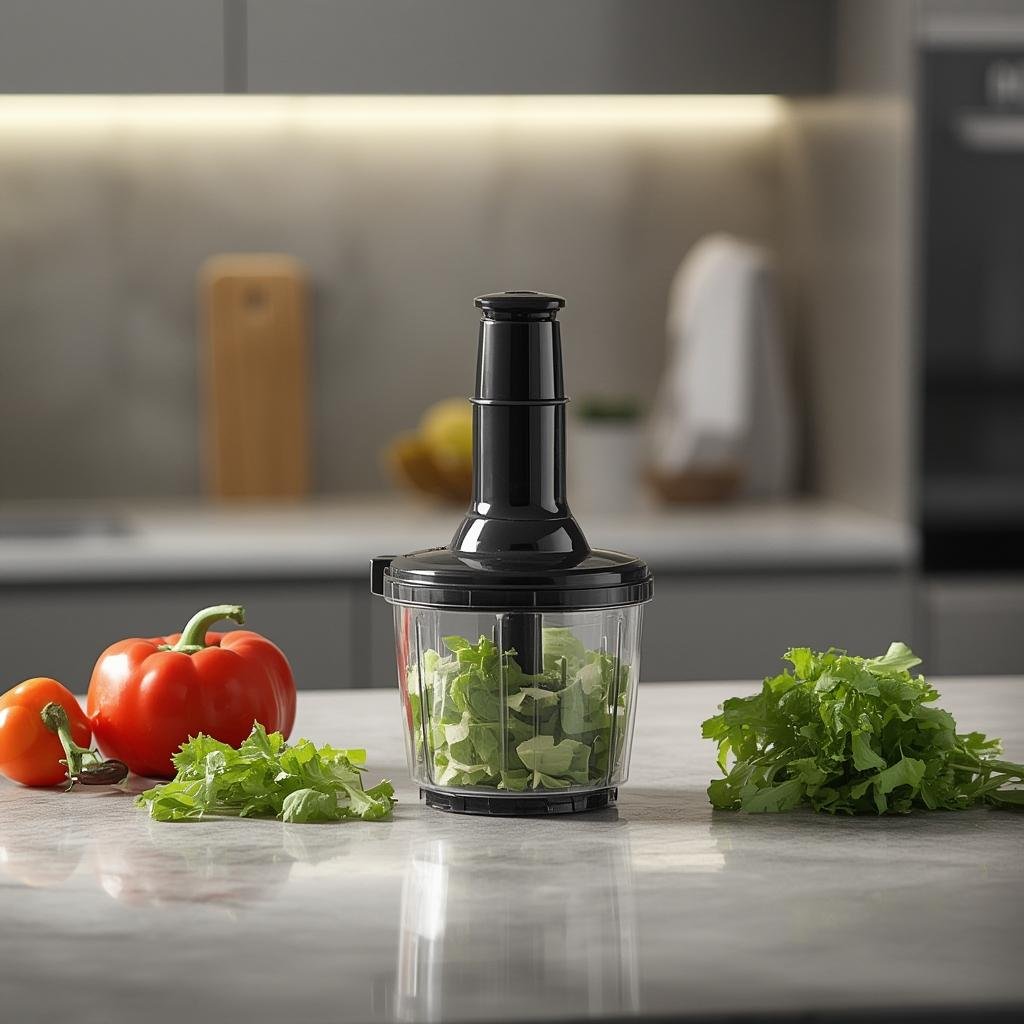
Pull-cord choppers use a rotary blade mechanism activated by pulling a cord. These are great for finer chops — think minced herbs, garlic, or salsa-style tomato pieces. They’re a bit more effort to clean but give you more control over texture since you can pull multiple times to get a finer result.
Electric food choppers are the heavy-duty option. They handle harder vegetables like carrots and beets with ease, and they’re ideal for large-batch prep. The tradeoff is counter space, cleanup time, and cost — they tend to sit in the premium value tier.
2. Blade Quality and Material
This is where cheap choppers fall apart — sometimes literally. Look for stainless steel blades, ideally with a higher-grade designation. Blades should feel solid, not flimsy, and the grid pattern should be tight and even. A poorly made blade grid will crush soft vegetables rather than cut them cleanly, leaving you with mushy results and a frustrating experience.
Some choppers come with interchangeable blade inserts for different cut sizes — fine dice, coarse chop, julienne strips, and so on. If versatility matters to you, this is a feature worth prioritizing. Just make sure the blade swap mechanism is intuitive and that replacement blades are actually available if one dulls or breaks.
3. Capacity and Container Size
The container that catches your chopped vegetables matters more than most people think. A small container means you’re constantly stopping to empty it, which defeats the purpose of fast prep. Look for a chopper with at least a 1.5-cup capacity container, and ideally one that’s also usable as a storage container so you can chop directly into something you can put in the fridge.
For family-sized meal prep, go bigger. Some choppers come with containers in the 3-to-4-cup range, which lets you chop an entire onion or a full bell pepper in one session without interruption.
4. Ease of Cleaning
A vegetable chopper you dread cleaning is a vegetable chopper you’ll stop using. The best models have dishwasher-safe components — container, lid, and blade insert. If the blades aren’t dishwasher safe, make sure they’re easy to rinse by hand without risking a cut. Some choppers come with a small cleaning brush, which is a nice touch for getting into the blade grid.
Avoid choppers with lots of small crevices or non-removable blades. These are hygiene nightmares and tend to harbor food residue no matter how carefully you wash them.
5. Stability During Use
A chopper that slides around on your counter is both annoying and dangerous. Look for models with a non-slip base — either rubber feet or a suction-cup style grip. This is especially important if you’re chopping firm vegetables that require more downward force. The last thing you want is the chopper skidding toward the edge of your counter mid-press.
6. Budget Tiers: What to Expect at Each Level
At the budget-friendly end, you’ll find basic single-blade push choppers that handle soft vegetables well. They’re great for occasional use or for someone just getting started. Don’t expect them to last years of daily use, but for light chopping tasks, they deliver solid value.
The mid-range tier is where most serious home cooks land. These choppers typically offer interchangeable blades, larger containers, better build quality, and more stable bases. They handle a wider variety of produce and are built to withstand regular use.
At the premium end, you’re looking at multi-function mandoline-style choppers or electric options with multiple speed settings, larger capacities, and professional-grade blade systems. These are worth the investment if you cook frequently, prep for a large household, or run a small food business.
Comparison Table: Top Vegetable Chopper Categories at a Glance
| Product Type | Value Tier | Best For | Key Strength | Main Drawback | Rating |
|---|---|---|---|---|---|
| Manual Push Chopper (Single Blade) | Budget-Friendly | Occasional choppers, small households | Compact, easy to use, fast cleanup | Limited to soft vegetables, small capacity | ⭐⭐⭐½ |
| Manual Push Chopper (Multi-Blade) | Mid-Range | Everyday meal prep, versatile cooks | Interchangeable blades, larger container | More parts to clean | ⭐⭐⭐⭐ |
| Pull-Cord Chopper | Budget to Mid-Range | Herbs, garlic, salsa, fine mince | Excellent texture control | Smaller capacity, cord mechanism can wear | ⭐⭐⭐⭐ |
| Mandoline-Style Slicer/Chopper | Mid-Range to Premium | Thin slicing, julienne, waffle cuts | Highly versatile, professional results | Requires careful handling, larger footprint | ⭐⭐⭐⭐½ |
| Electric Food Chopper | Premium | Large-batch prep, hard vegetables | Effortless power, consistent results | Counter space, longer cleanup | ⭐⭐⭐⭐½ |
Frequently Asked Questions About Vegetable Choppers
What is a vegetable chopper and how does it work?
A vegetable chopper is a kitchen tool designed to quickly and uniformly cut vegetables into pieces — diced, sliced, minced, or julienned — without the need for a knife and cutting board. Most manual versions work by pressing produce through a sharp blade grid using a plunger mechanism. The food passes through the blades and falls into a collection container below. Pull-cord versions spin a rotary blade to chop food inside a bowl. Electric versions use a motorized blade to process food at the push of a button.
Are vegetable choppers worth it for everyday cooking?
Absolutely — especially if you cook regularly or do any amount of meal prepping. A good vegetable chopper can cut your prep time in half or more, and it produces more uniform cuts than most home cooks achieve by hand. The consistency alone improves your cooking results. For anyone who finds chopping tedious, painful due to wrist issues, or simply time-consuming, a vegetable chopper is one of the best small investments you can make in your kitchen.
Can a vegetable chopper handle hard vegetables like carrots or beets?
It depends on the type. Most manual push choppers are designed for soft-to-medium vegetables — onions, peppers, zucchini, mushrooms, tomatoes, cucumbers, and similar produce. Trying to force a raw carrot through a standard push chopper can damage the blades or the housing. For harder root vegetables, look for a heavy-duty multi-function chopper with reinforced blades, or opt for an electric food chopper, which handles firm produce with ease.
How do I clean a vegetable chopper safely?
Most modern vegetable choppers have dishwasher-safe components, which makes cleanup straightforward — just disassemble, place the parts on the top rack, and run a normal cycle. If washing by hand, always use a brush rather than a sponge to clean around the blades, and never run your fingers directly across the blade grid. Rinse immediately after use to prevent food from drying and sticking in the blade channels. Dry thoroughly before reassembling to prevent rust on metal blades.
What size vegetable chopper should I buy?
For a single person or couple, a compact chopper with a 1.5 to 2-cup container is usually sufficient. For families of three or more, or for anyone who meal preps in bulk, look for a model with a 3-cup or larger container. Larger choppers also tend to have more stable bases and sturdier construction, which makes them better suited to frequent, heavy use. Consider your storage space too — some of the larger multi-function models can be bulky to store in a small kitchen.
What’s the difference between a vegetable chopper and a food processor?
A vegetable chopper is a simpler, more targeted tool. It’s designed specifically for chopping, dicing, and slicing vegetables quickly with minimal setup and cleanup. A food processor is a more powerful, multi-function appliance that can chop, slice, shred, puree, knead dough, and more. Food processors are better for complex tasks and large volumes, but they take longer to set up and clean. For everyday vegetable prep, most home cooks find a dedicated chopper faster and more convenient than pulling out a full food processor.
The Bottom Line: The Right Vegetable Chopper Makes Cooking Genuinely Enjoyable
Here’s what it comes down to: the best vegetable chopper is the one that fits your actual cooking habits. If you’re cooking for one or two people a few nights a week, a compact, budget-friendly push chopper will serve you well and won’t take up much space. If you’re feeding a family, meal prepping on Sundays, or cooking elaborate dishes regularly, investing in a mid-range or premium multi-blade chopper pays for itself in time saved within the first month.
The key things to prioritize are blade quality, container capacity, ease of cleaning, and stability. Don’t get distracted by choppers that promise to do twenty things — focus on finding one that does the core job exceptionally well. A sharp, sturdy blade grid that produces clean, even cuts is worth far more than a dozen mediocre attachments.
Whatever your budget or cooking style, there’s a vegetable chopper out there that will make your time in the kitchen faster, less frustrating, and more enjoyable. Head over to Amazon, compare the current options, check the reviews, and look for the features we’ve outlined in this guide. Your future self — the one who actually has time to sit down and enjoy dinner — will thank you.
Happy chopping, and happy cooking. The prep work doesn’t have to be the hard part anymore.