
As an affiliate, I may earn a commission from qualifying purchases made through links on this page. This comes at no extra cost to you but helps support my work. Thank you!
Unleash Your Inner Chef Scientist: The Best Molecular Gastronomy Kits of 2026
Remember the first time you saw a chef on TV turn a simple liquid into perfect spheres that burst with flavor in your mouth? Or witnessed smoke billowing from a perfectly plated dessert? That’s molecular gastronomy—the fascinating intersection of food science and culinary arts that transforms ordinary ingredients into extraordinary dining experiences.
I still recall my first attempt at spherification. I was trying to create those delicate “caviar” pearls you see at high-end restaurants. Without the right tools, my kitchen looked like a science experiment gone wrong, and I ended up with oddly shaped blobs that were more “blob” than “sphere.” If you’ve ever been curious about bringing these restaurant-worthy techniques into your home kitchen, you’re in the right place.
Today, I’m diving deep into the world of molecular gastronomy kits—those all-in-one packages that give home cooks the tools to create culinary magic without attending culinary school or investing in expensive professional equipment.
Why You Need a Molecular Gastronomy Kit
You might be wondering: “Do I really need special equipment to experiment with molecular gastronomy?” The short answer is yes—if you want consistent, impressive results.
Without the proper tools, you’ll likely face these common challenges:
- Inconsistent results – Trying to create uniform spheres or foams without specialized tools often leads to unpredictable outcomes
- Wasted ingredients – Failed experiments mean throwing away expensive ingredients
- Limited techniques – Some molecular techniques are virtually impossible without specific tools
- Frustration – What should be fun becomes an exercise in disappointment
A quality molecular gastronomy kit solves these problems by providing precisely the tools and ingredients you need, along with instructions that help even beginners achieve impressive results. Think of it as your passport to creating restaurant-quality presentation and flavors at home.
Whether you’re looking to impress guests at your next dinner party, explore a new culinary hobby, or simply bring more creativity to your cooking, a molecular gastronomy kit is your entry point into this fascinating world. Let’s explore the best options available today.
Top Molecular Gastronomy Kits Reviewed
1. ULTIMATE Molecular Gastronomy “Made Easy” Starter Kit
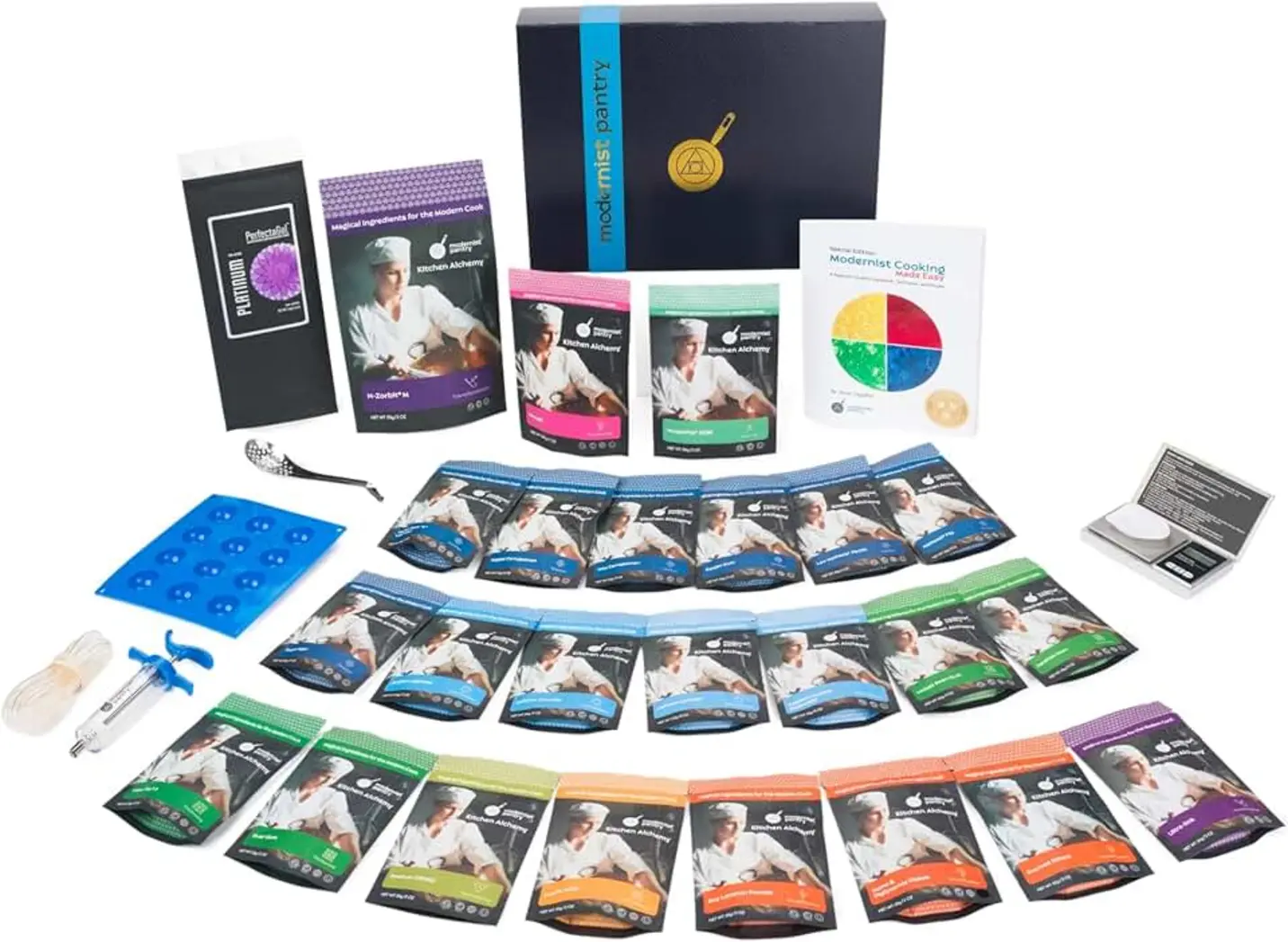
If you’re serious about diving into molecular gastronomy, the ULTIMATE Starter Kit lives up to its name. This comprehensive kit is designed for both beginners and experienced cooks who want to explore multiple techniques without purchasing additional supplies.
What immediately impressed me was the quality and quantity of the ingredients. Unlike some kits that provide sample-sized portions, this one comes with generous amounts of all essential additives: sodium alginate, calcium lactate, xanthan gum, agar-agar, and more. All ingredients are non-GMO and gluten-free, which is a significant plus for those with dietary restrictions.
The kit includes specialized tools like silicone tubing for reverse spherification, several measuring spoons of different sizes, pipettes, and molds—essentially everything you need to create caviar pearls, foams, gels, and spheres. The instruction manual deserves special mention; it’s comprehensive without being overwhelming, offering step-by-step guides for various techniques.
During testing, I found the spherification process particularly straightforward with this kit. The included calcium bath container made it easy to create perfect spheres without the mess I’ve experienced with makeshift setups. The emulsification tools also worked exceptionally well for creating light, airy foams that held their structure.
This is certainly a premium investment, but considering the range of techniques it enables and the quality of the components, it offers excellent value for serious culinary enthusiasts. If you’re planning to explore molecular gastronomy as a regular part of your cooking repertoire rather than a one-time experiment, this kit is worth every penny.
Pros:
- Comprehensive set with all essential ingredients and tools
- Non-GMO, gluten-free ingredients
- Excellent instruction manual with detailed recipes
- High-quality, durable tools
- Generous quantities of additives
Cons:
- Higher price point may deter casual experimenters
- Storage case could be more organized
- Some advanced techniques may require additional equipment
2. Caviar Maker Box, Spherification Dropper Kit
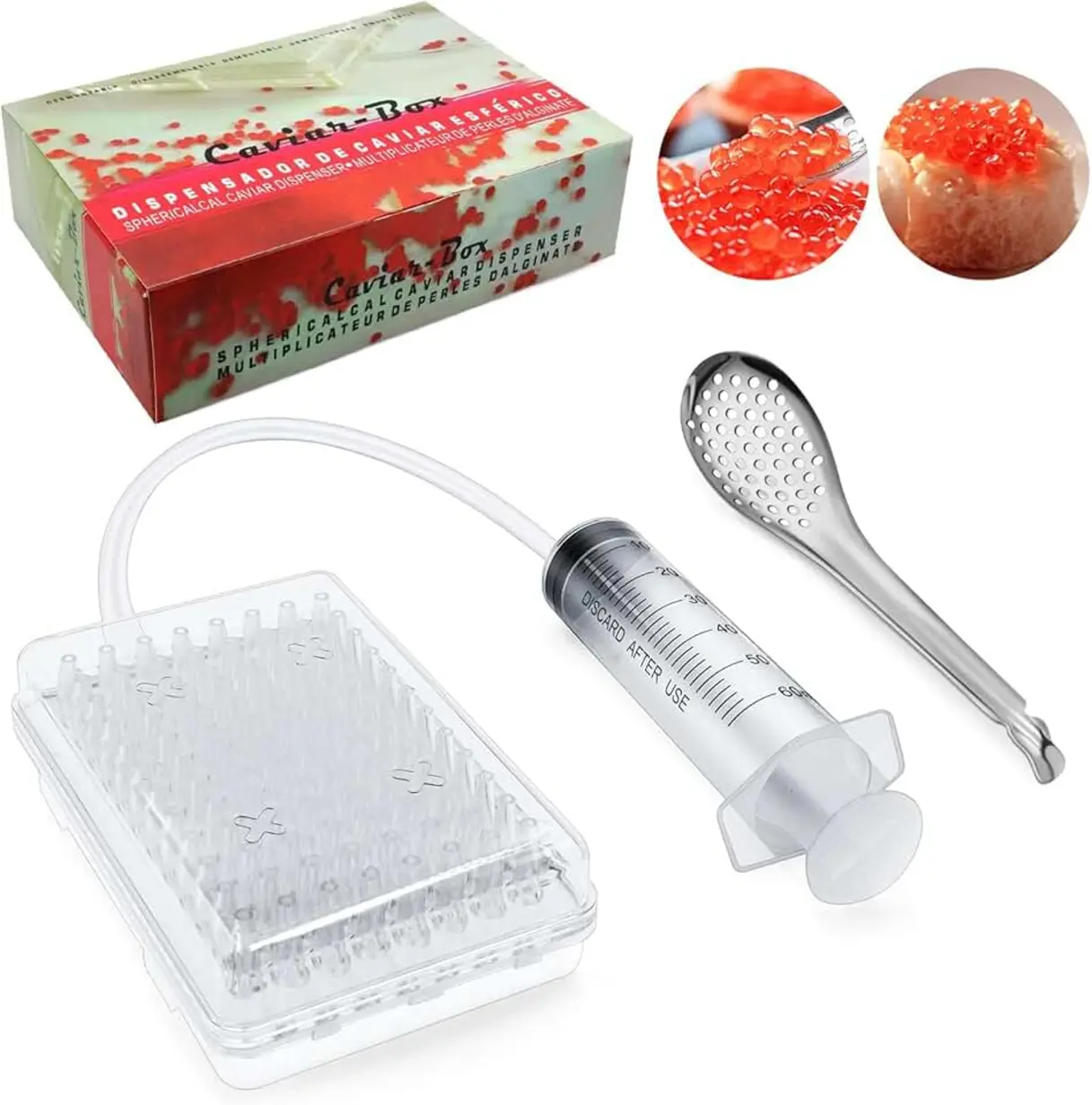
For those specifically interested in creating those impressive little flavor pearls (often called “caviar” in molecular gastronomy), this specialized kit is a fantastic entry point. It’s also the most budget-friendly option on our list, making it perfect for curious cooks who want to test the waters without a significant investment.
The standout feature is the 96-hole spherification dropper, which allows you to create dozens of uniform caviar pearls simultaneously—a massive time-saver compared to the tedious process of making them one by one. The kit comes with a suction tray that makes collecting your creations easy and mess-free.
I was pleasantly surprised by the quality of the included syringe, which allows for precise control when filling the dropper. The caviar spoon is a thoughtful addition that makes serving your creations more elegant and prevents them from breaking during transfer.
It’s important to note that this kit focuses exclusively on spherification—you won’t find ingredients for foams, gels, or other molecular techniques. You’ll need to purchase sodium alginate and calcium chloride separately, which is the only significant drawback. However, this specialization is also what keeps the price so accessible.
During testing, I created perfect balsamic vinegar pearls that maintained their shape beautifully on a caprese salad. The uniform size of the pearls was impressive and would be difficult to achieve with more manual methods. If you’re growing fresh basil in a smart herb growing system, pairing it with homemade balsamic caviar creates a stunning presentation.
Pros:
- Very affordable entry point—check current price on Amazon
- Creates 96 uniform pearls simultaneously
- Suction tray minimizes mess
- High-quality dropper mechanism
- Compact and easy to store
Cons:
- No ingredients included
- Limited to spherification technique only
- Instruction manual could be more detailed
- Plastic construction feels less premium than other options
3. PREMIUM Molecular Gastronomy “Made Easy” Starter Kit
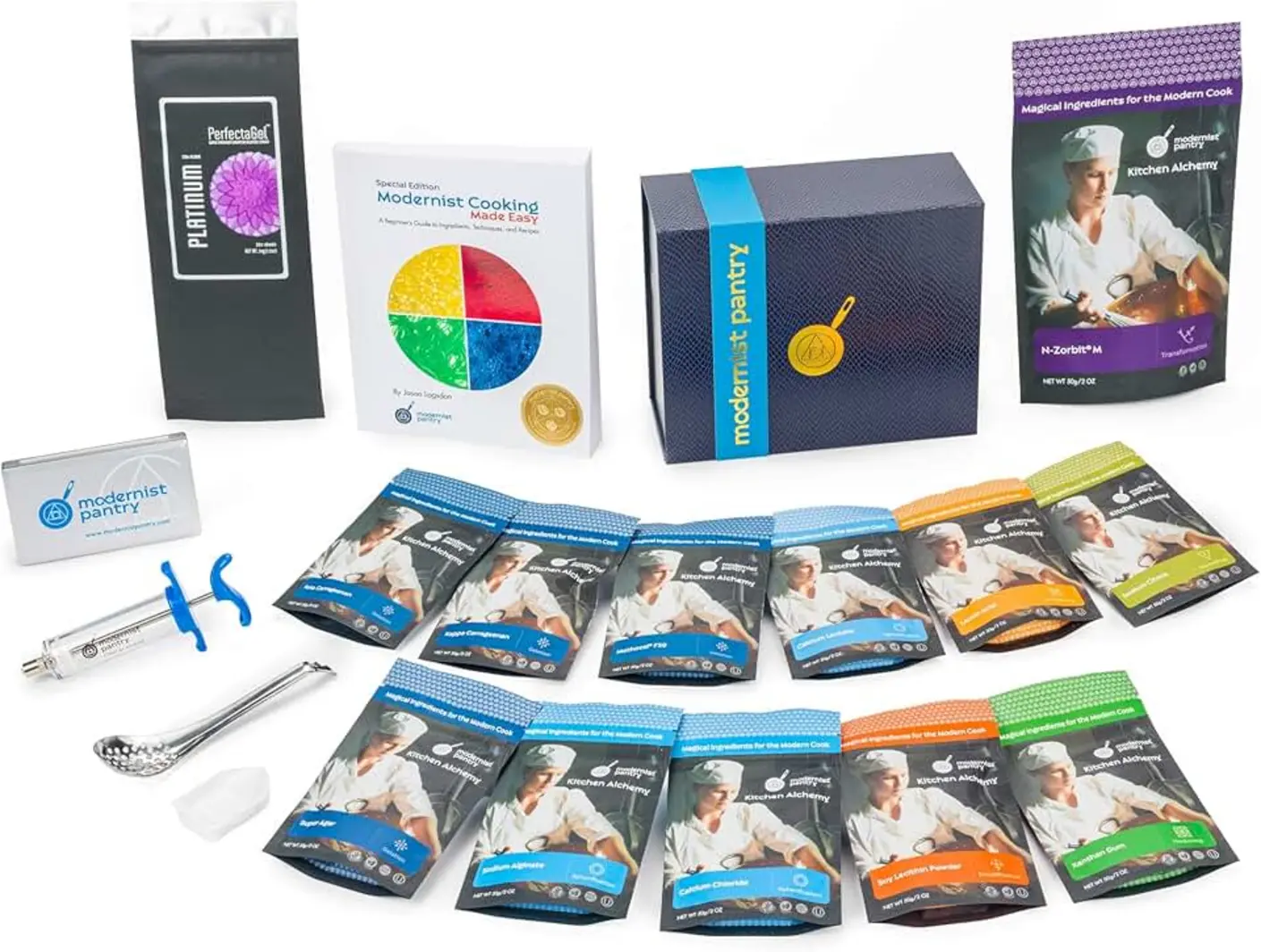
The PREMIUM Molecular Gastronomy Starter Kit strikes an excellent balance between comprehensiveness and affordability, positioned as a mid-range option that doesn’t compromise on quality or versatility.
This kit includes five essential food additives: sodium alginate, calcium lactate, agar-agar, soy lecithin, and xanthan gum. All are non-GMO, gluten-free, and kosher-certified—a level of ingredient quality not always found in mid-range kits. The quantities are sufficient for multiple experiments, though not as generous as the ULTIMATE kit.
Tool-wise, you’ll find everything needed for basic to intermediate molecular gastronomy techniques: pipettes, silicone tubing for reverse spherification, measuring spoons, and molds. The silicone tools are particularly impressive—they’re heat-resistant and dishwasher-safe, which makes cleanup much easier.
What sets this kit apart is its excellent recipe booklet, which includes 50 recipes ranging from beginner to advanced. The instructions are clear and include troubleshooting tips, which I found invaluable when my first attempt at a mango sphere didn’t set properly.
During testing, I was particularly impressed with the results when creating agar-agar gels and soy lecithin foams. The measuring tools provided precise amounts, which is crucial for these techniques where even small measurement errors can lead to failure.
For most home cooks who are serious about exploring molecular gastronomy but don’t need the most extensive kit available, this is likely the sweet spot in terms of value and capability.
Pros:
- Excellent value for the feature set
- High-quality, certified ingredients
- Comprehensive recipe booklet with 50 recipes
- Durable, heat-resistant tools
- Covers most popular molecular gastronomy techniques
Cons:
- Smaller quantities of additives than the ULTIMATE kit
- Storage container could be more durable
- Missing some specialized tools for advanced techniques
- No digital temperature tool included
4. Molecular Gastronomy Starter Kit – CUISINE R-EVOLUTION
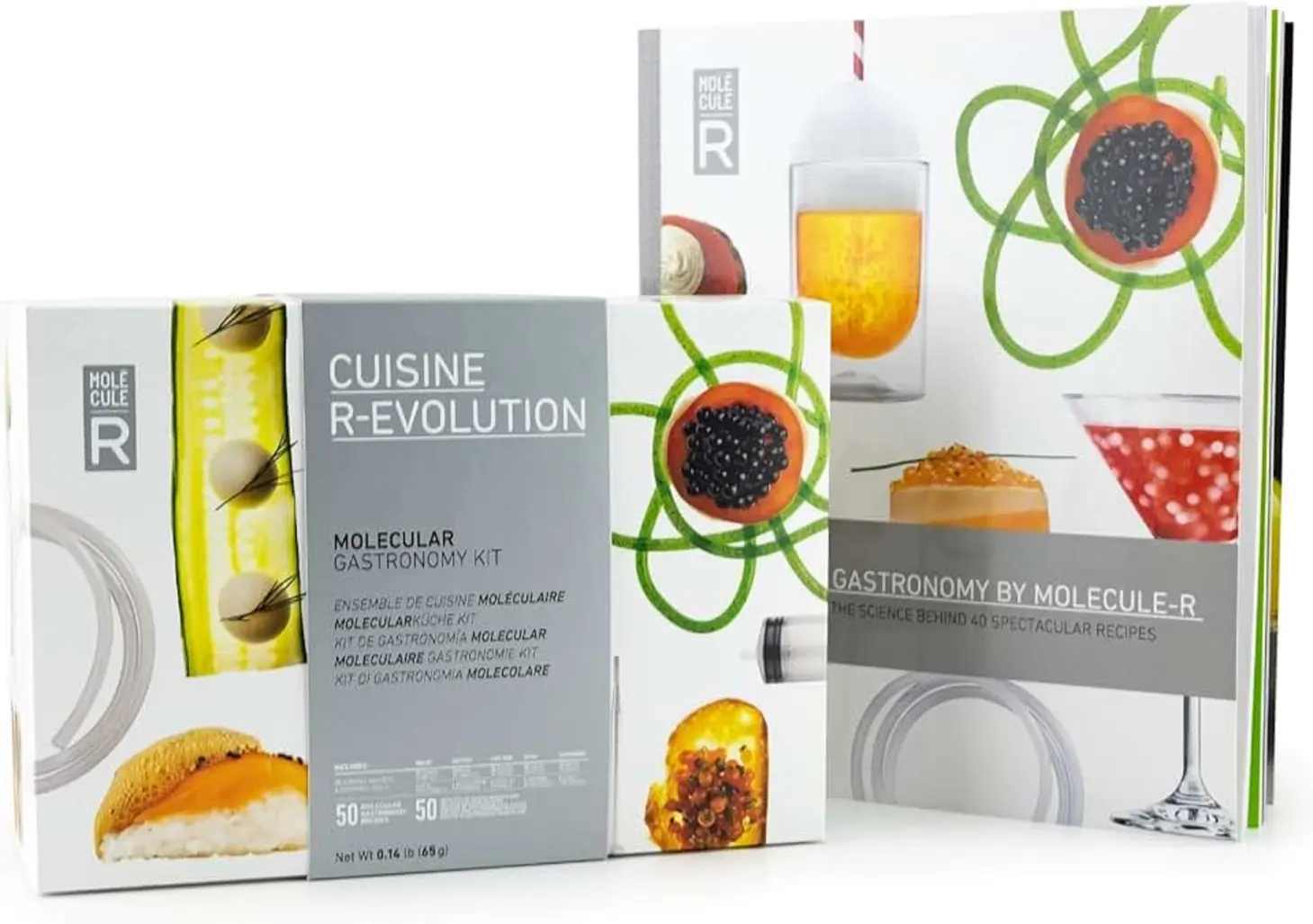
The CUISINE R-EVOLUTION kit stands out for its thoughtful design and focus on accessibility for beginners. It offers an excellent entry point for those who want a complete experience without the higher investment of premium kits.
What immediately caught my attention was the presentation—this kit comes in an attractive gift box that makes it perfect for giving to a culinary enthusiast. Inside, you’ll find five food additives: sodium alginate, calcium lactate, agar-agar, soy lecithin, and xanthan gum in quantities suitable for initial experimentation.
The tools included are basic but effective: pipettes, measuring spoons, and silicone molds. While not as extensive as higher-priced kits, they cover the fundamental techniques that most beginners want to try first: basic spherification, gelification, and emulsification.
The standout feature is the included recipe book, which not only provides step-by-step instructions but also includes QR codes linking to video tutorials. As someone who learns better by watching rather than reading, I found this incredibly helpful when trying the more complex techniques.
During testing, the spherification tools worked well, though I found the process slightly messier than with the more specialized equipment in premium kits. The gelification results were excellent, with the agar-agar creating perfect, clear gels with vibrant flavors.
This kit is ideal for beginners who want to explore multiple techniques without a significant investment or for gift-giving to culinary enthusiasts. If you find yourself hooked on molecular gastronomy after using this kit, you can always upgrade to a more comprehensive set later.
Pros:
- Attractive packaging makes it gift-worthy
- Excellent instructional materials including video tutorials
- Good variety of basic additives
- Accessible entry point for multiple techniques
- Free recipe book with creative ideas
Cons:
- Smaller quantities of additives
- Basic tools may need upgrading for serious enthusiasts
- No specialized spherification dropper
- Storage solution not included
Comparison Table: Molecular Gastronomy Kits
| Product | Included Additives | Tools | Best For | Rating |
|---|---|---|---|---|
| ULTIMATE Molecular Gastronomy Starter Kit | Full set (10+) in large quantities | Comprehensive set including specialized tools | Serious enthusiasts, frequent use | 9.5/10 |
| Caviar Maker Box Kit | None included | Specialized spherification tools | Spherification specialists, budget-conscious | 7.8/10 |
| PREMIUM Molecular Gastronomy Starter Kit | 5 essential additives in medium quantities | Complete set for most techniques | Home chefs wanting versatility | 9.0/10 |
| CUISINE R-EVOLUTION Starter Kit | 5 essential additives in smaller quantities | Basic tools for fundamental techniques | Beginners, gift-giving | 8.2/10 |
Buyer’s Guide: Choosing the Right Molecular Gastronomy Kit
Selecting the perfect molecular gastronomy kit depends on your specific needs, experience level, and culinary ambitions. Here’s what to consider before making your purchase:
Experience Level
For beginners: Look for kits that emphasize clear instructions and include video tutorials. The CUISINE R-EVOLUTION kit is particularly good for newcomers thanks to its accessible approach and video guidance.
For intermediate users: Consider kits that offer a wider range of techniques and more durable tools. The PREMIUM kit strikes a good balance between accessibility and versatility.
For advanced enthusiasts: Invest in comprehensive kits with professional-grade tools and larger quantities of additives. The ULTIMATE kit is designed for those who plan to make molecular gastronomy a regular part of their cooking.
Techniques You Want to Explore
Different kits specialize in different molecular techniques:
- Spherification: If creating caviar pearls and larger spheres is your primary interest, the Caviar Maker Box offers specialized tools at an accessible price.
- Gelification: All the multi-purpose kits include agar-agar, but the PREMIUM and ULTIMATE kits provide better tools for precise temperature control.
- Emulsification and foams: Look for kits that include soy lecithin and appropriate whisking tools.
- Multiple techniques: For the widest range of possibilities, the ULTIMATE kit covers virtually every common molecular gastronomy technique.
Ingredient Quality
The quality of additives can significantly impact your results:
- Check for non-GMO certification if that’s important to you
- For those with dietary restrictions, verify gluten-free status
- Kosher certification may be relevant for some users
All three multi-purpose kits in our review use high-quality additives, with the ULTIMATE and PREMIUM kits offering the most comprehensive certifications.
Quantity vs. Variety
Consider whether you prefer:
- Larger quantities of a few essential additives (better for perfecting specific techniques)
- Smaller quantities of many different additives (better for exploring various techniques)
The ULTIMATE kit offers both quantity and variety, while the more affordable kits typically require you to choose between them.
Budget Considerations
Molecular gastronomy kits span a wide range of price tiers to suit different needs:
- Entry-level: Specialized kits like the Caviar Maker Box that focus on one technique—ideal for dipping your toes in
- Mid-range: Starter kits with essential tools and additives like the CUISINE R-EVOLUTION—great for beginners exploring multiple techniques
- Premium: Comprehensive kits like the PREMIUM and ULTIMATE options with higher-quality tools and larger quantities—best for serious enthusiasts
Consider how frequently you’ll use the kit when determining your budget. For occasional use, a mid-range kit is often sufficient, while frequent users will find more value in premium options despite the higher initial investment.
Frequently Asked Questions
What exactly is molecular gastronomy?
Molecular gastronomy is a sub-discipline of food science that explores the physical and chemical transformations that occur during cooking. It applies scientific techniques and tools to create innovative dishes with unique textures, shapes, and presentations. Common techniques include spherification (creating caviar-like pearls), gelification (creating gels with unusual textures), emulsification (creating stable foams), and sous-vide cooking (precise temperature-controlled cooking).
Do I need special ingredients to practice molecular gastronomy?
Yes, most molecular gastronomy techniques require specific additives that aren’t typically found in home kitchens. Common ingredients include sodium alginate and calcium chloride for spherification, agar-agar for gelification, soy lecithin for foams, and xanthan gum for thickening. These ingredients are generally used in very small quantities but have powerful effects on food texture and behavior. Quality molecular gastronomy kits include these essential additives.
Are molecular gastronomy ingredients safe to eat?
Yes, the ingredients used in molecular gastronomy are food-grade and safe for consumption when used as directed. Many have been used in commercial food production for decades. Additives like agar-agar (derived from seaweed) and lecithin (found naturally in egg yolks) have natural origins. Always follow the recommended quantities in recipes, as some additives are very potent and only needed in small amounts. If you have specific allergies or dietary restrictions, check the ingredient list carefully.
How difficult is molecular gastronomy for beginners?
While some techniques can be challenging, many molecular gastronomy basics are accessible to beginners with the right tools and instructions. Starting with a quality kit designed for beginners (like the CUISINE R-EVOLUTION) provides structured guidance and appropriate tools. Begin with simpler techniques like basic spherification or foam creation before moving to more complex methods. Precision is key—following measurements exactly and maintaining recommended temperatures will significantly improve your success rate.
Can I create molecular gastronomy dishes without a kit?
While technically possible, attempting molecular gastronomy without proper tools often leads to frustration and wasted ingredients. You’d need to source the specialized additives separately and improvise tools, which can be more expensive and less effective than purchasing a kit. Some basic techniques might be possible with kitchen items like syringes and measuring spoons, but for consistent results and a proper introduction to the craft, a kit is highly recommended.
How long do the ingredients in molecular gastronomy kits last?
Most dry additives included in molecular gastronomy kits have a shelf life of 1-2 years when stored properly in airtight containers away from heat and moisture. Liquid additives typically have shorter shelf lives. The quantities provided in comprehensive kits like the ULTIMATE and PREMIUM options are sufficient for numerous experiments over many months. For optimal freshness, always reseal packages tightly after use and follow any specific storage instructions provided with your kit.
Conclusion: Finding Your Perfect Molecular Gastronomy Kit
After thoroughly testing these molecular gastronomy kits, it’s clear that the right choice depends on your specific needs and ambitions in the kitchen.
For those serious about exploring the full range of molecular techniques and planning to use them regularly, the ULTIMATE Molecular Gastronomy Starter Kit is the standout choice. Its comprehensive tools and generous quantities of high-quality additives provide everything needed for both beginners and advanced users.
Budget-conscious cooks who specifically want to create those impressive caviar pearls will find the Caviar Maker Box offers exceptional value, though you’ll need to purchase additives separately.
The PREMIUM Starter Kit hits the sweet spot for most home chefs, offering a balance of quality, variety, and value that makes it our top recommendation for most users.
For beginners or those looking for a gift, the CUISINE R-EVOLUTION kit provides an accessible introduction with excellent instructional materials.
Whichever kit you choose, molecular gastronomy opens up a world of culinary creativity that can transform your home cooking from everyday meals to memorable dining experiences. The techniques you’ll learn can be applied to everything from casual family dinners to sophisticated dinner parties, allowing you to create dishes that not only taste extraordinary but create lasting impressions through their innovative presentation.
Remember that like any culinary skill, molecular gastronomy improves with practice. Don’t be discouraged by initial failures—even professional chefs went through a learning curve with these techniques. With the right tools from one of these quality kits, a bit of patience, and a sense of adventure, you’ll soon be creating culinary magic in your own kitchen.
Have you tried molecular gastronomy at home? Which techniques are you most excited to explore? Let us know in the comments below!